Early birds welcome! 7 AM appointments available on select days starting April 1- Call or Book Online!

How to Create a Healthy Daily Routine for a New Puppy

Bringing a new puppy home is an exciting experience, but those first few months also come with plenty of new responsibilities. Puppies are learning how the world works, developing quickly, and relying on their families to provide structure, nutrition, rest, training, and appropriate veterinary attention. Establishing a predictable daily routine can make this transition easier while helping your puppy develop healthy habits that can last throughout life.
Want to learn more about how to build a healthy routine for your pup? Read this blog till the end!
Start With a Consistent Daily Schedule
Puppies generally do best when their days have some consistency. A predictable schedule helps your puppy understand when it is time to eat, sleep, play, go outside, and settle down. Your routine does not need to follow an exact minute-by-minute timetable. Instead, aim for a dependable pattern that your puppy can gradually learn.
For example, the morning might begin with a bathroom break, followed by breakfast and some gentle play. Afterward, your puppy may need time to rest. Later in the day, you can include another bathroom break, a short training session, playtime, and another nap.
Consistency is particularly helpful during the early stages of house training. Taking your puppy out regularly, especially after waking, eating, drinking, and playing, can help establish appropriate bathroom habits. Puppies have developing bladder control, so accidents can happen even when you are following a careful schedule. Patience and positive reinforcement are important.
Make Meals Part of the Routine
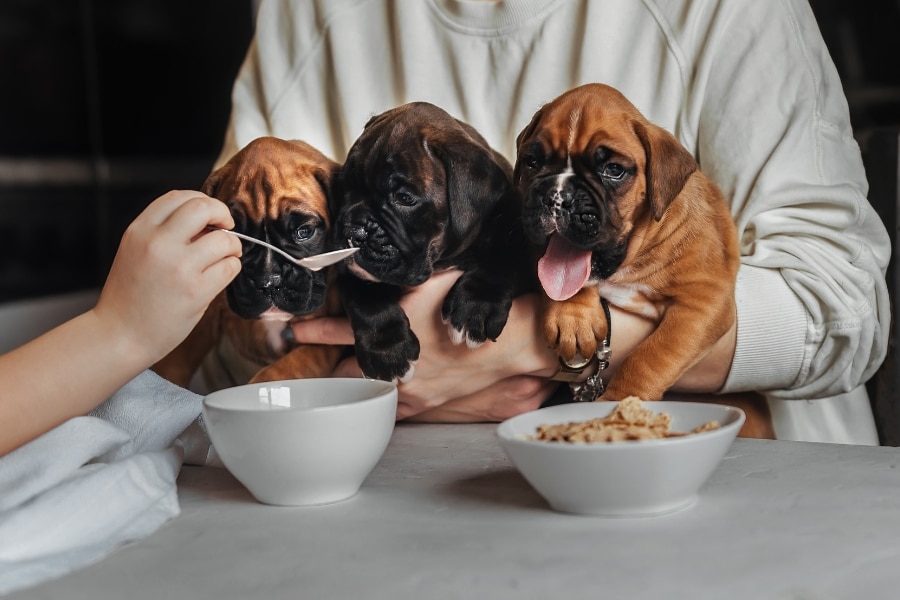
Feeding your puppy at consistent times can help create structure throughout the day. Puppies have different nutritional requirements from adult dogs, and their feeding needs can vary depending on factors such as age, breed, size, growth rate, and overall health.
Rather than making major changes to your puppy’s diet on your own, discuss nutrition with your veterinarian. During your puppy’s early visits, our veterinary team can answer questions about nutrition and help you understand what is appropriate for your individual puppy.
Fresh, clean water should also be readily available. Keep your puppy’s food and water areas clean, and pay attention to changes in appetite or drinking habits. A sudden change in eating or drinking can sometimes indicate that something is wrong and may warrant a conversation with your veterinarian.
Build in Plenty of Rest
One of the easiest things new puppy owners can overlook is the importance of sleep. Puppies spend a significant amount of time sleeping because their bodies and brains are developing rapidly. A puppy that seems energetic one moment may need a nap shortly afterward.
Create a comfortable, quiet place where your puppy can rest without constant interruptions. Depending on your household, this may be a crate, puppy-safe room, bed, or another designated resting area.
Try to balance active periods with quiet periods. An overtired puppy may become unusually mouthy, restless, or difficult to settle. Instead of assuming your puppy needs more exercise, consider whether it is simply time for a break.
Include Safe Play and Age-Appropriate Activity
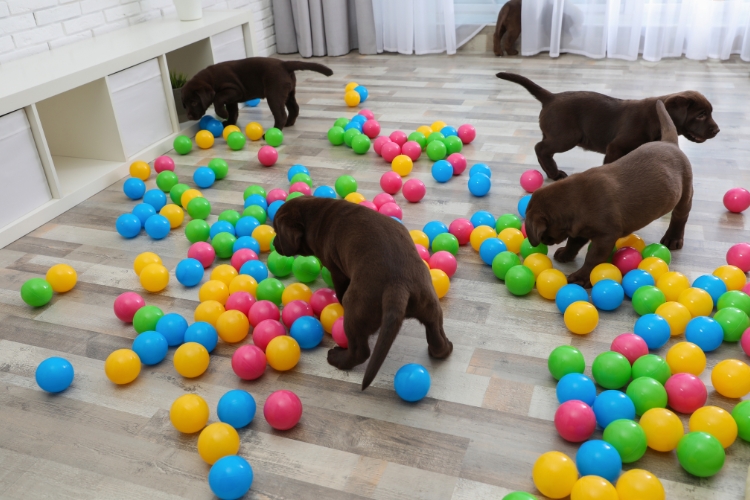
Play is an important part of a puppy’s day. It provides opportunities for movement, exploration, and interaction with family members. However, puppies are still growing, so activity should be appropriate for their developmental stage.
Short periods of supervised play can be more suitable than expecting a young puppy to participate in long or strenuous activities. Your veterinarian can provide guidance based on your puppy’s age, breed, size, and individual needs.
Puppy care also involves creating a safe environment for exploration. Remove or secure items your puppy could chew, swallow, or damage. Keep potentially harmful household substances out of reach and supervise your puppy when introducing new toys or activities.
Make Training a Daily Habit
Training does not need to be a long or complicated process. In fact, short and consistent sessions can be easier for a young puppy to handle.
Use everyday moments to reinforce desirable behaviors. You can practice responding to their name, sitting, coming when called, settling calmly, and other basic skills. Reward-based training can help make learning a positive experience.
House rules should also be consistent among family members. If one person allows a behavior while another discourages it, your puppy may have difficulty understanding what is expected.
Training should be patient and appropriate for the puppy’s age and temperament. If you have questions about behavioral concerns, bring them up during a veterinary visit rather than waiting for the problem to become more difficult to manage.
Keep Veterinary Visits on the Schedule
A healthy routine extends beyond what happens at home. Veterinary visits are an important part of helping a puppy get a healthy start.
At our veterinary practice, a puppy’s first examination can establish a health baseline and provide an opportunity to screen for potential concerns such as parasites or disease. We can also help develop a vaccination schedule suited to your puppy’s breed and age.
These early appointments are also a good time to ask questions. New pet owners often have concerns about feeding, training, behavior, preventive puppy care, and what changes are normal during growth. Keeping a list of questions between appointments can help you make the most of each visit.
Preventive planning should be individualized rather than based solely on a generic schedule found online. Your veterinarian can consider your puppy’s health, lifestyle, environment, and other relevant factors when discussing an appropriate wellness plan.
Add Identification and Safety Measures
Your puppy’s daily routine should include habits that help keep them safe. Make sure your puppy wears appropriate identification, and talk with your veterinarian about microchipping.
Our practice recommends microchipping along with having your pet wear a collar. A microchip provides a permanent form of identification and can be especially helpful if a pet becomes lost. The chip itself does not replace registration, however; the identification number needs to be registered with your current contact information so it can serve its intended purpose.
As your puppy becomes more curious and mobile, review your home’s safety regularly. Check gates, doors, fences, and areas where a small puppy might squeeze through or become trapped.
Help Your Puppy Build Healthy Habits With Our Professional Care
Your puppy’s needs will change as they grow, and their daily routine should grow with them. From feeding and exercise to sleep, training, and preventive care, each stage of development brings new responsibilities for pet owners.
At East Hampton Veterinary Group, we are here to help you navigate these changes and give your puppy a healthy start in life. Our veterinary team can provide guidance on age-appropriate routines, nutrition, vaccinations, wellness exams, and other important aspects of puppy care.
Give your puppy the care they need at every stage of growth. Contact us today to schedule a puppy wellness appointment and help your new companion start life on a healthy path.
Seek Our Professional Care Today!
Creating a healthy routine is one of the best ways to give a new puppy a positive start. Every puppy is different, so a routine should be adapted to their age, breed, lifestyle, and individual health needs.
If you recently welcomed a puppy into your home or have questions about establishing an appropriate wellness plan, contact us to schedule a visit with our veterinary team.
Frequently Asked Questions
- When should I establish a daily routine for my new puppy?
You can begin establishing a routine as soon as your puppy comes home. Start with consistent patterns for bathroom breaks, meals, rest, play, and training. Keep the schedule flexible enough to accommodate your puppy’s age and individual needs.
- How often should a puppy go outside for bathroom breaks?
Young puppies usually need frequent bathroom opportunities because their bladder control is still developing. Taking them outside after sleeping, eating, drinking, and playing can help support house training. Your veterinarian can provide guidance based on your puppy’s age and circumstances.
- How much exercise does a new puppy need?
Exercise requirements vary according to age, breed, size, development, and health. Short, supervised periods of age-appropriate activity are generally preferable to demanding strenuous exercise from a growing puppy. Ask your veterinarian for individualized recommendations.
- Where can I schedule my puppy’s first veterinary visit in East Hampton?
You can schedule your puppy’s first wellness examination at East Hampton Veterinary Group in East Hampton. Our veterinary team can assess your puppy’s health, discuss vaccinations, screen for potential concerns, and provide guidance on nutrition and preventive care.
- Should I microchip my puppy?
Microchipping provides a permanent form of identification and can improve the chances of being reunited with a lost pet. Our veterinary practice recommends microchipping along with keeping a collar on your pet and making sure the microchip is registered with current contact information.
- Can East Hampton Veterinary Group help me create a healthy routine for my new puppy?
Yes. At East Hampton Veterinary Group, we help puppy owners in East Hampton understand their pets’ changing needs. Our veterinary team can offer guidance on feeding schedules, age-appropriate exercise, vaccinations, preventive care, and behavioral concerns to support healthy development.